Most dry dog food is extruded: a dough of meals and starches is forced through a die at high pressure and around 130 °C, puffed, dried, and then sprayed with fat and a “palatant” so that dogs will eat it. It is efficient. It is also why so much kibble looks and smells the same whatever the bag says.
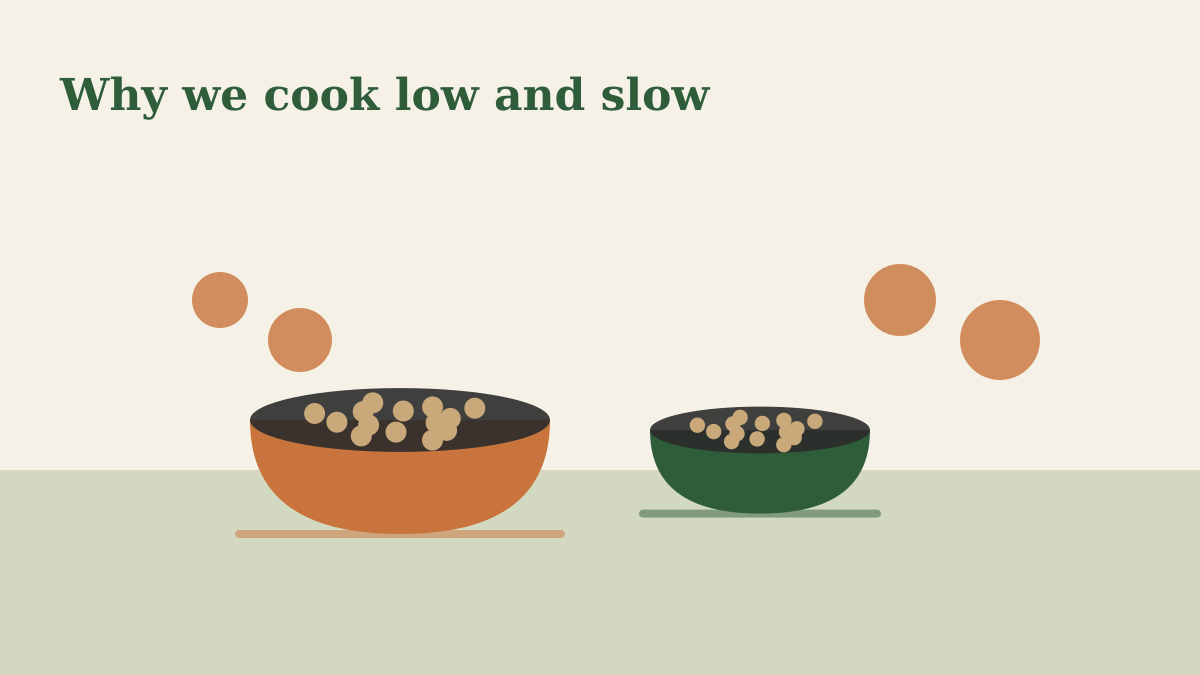
We do something closer to what Tomas did in restaurant kitchens for fifteen years. Fresh meat and vegetables go into a steam kettle at 85 °C for an hour and a half. That is hot enough to make the food safe and digestible, and cool enough that the amino acids in the meat stay intact and the vegetables keep their colour.
Then we wait
The cooked mix is pressed into small pieces and moved to the drying room, where it spends eighteen hours at 55 °C. Slow drying is what lets us skip preservatives: at 10 % moisture the food keeps for nine months with nothing added but mixed tocopherols from sunflower.
It also explains the price. A 40 kg batch occupies the kettle for a morning and the drying room for a day. An extruder makes that much in about four minutes.
What you notice
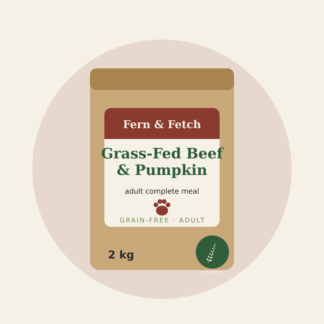
Open a bag of Grass-Fed Beef & Pumpkin and it smells of beef and pumpkin. The pieces are not uniform. Some dogs, used to sprayed-on flavour, take a day or two to decide it is food. Then, in our experience and in the words of the customers who write to us, they decide rather firmly that it is.